

When designing or maintaining piping systems, the correct choice of an EN 1092-1 flange is crucial for safe, reliable, and long-term operation. Standard EN 1092‑1 it defines the dimensions, shapes, sealing surfaces and pressure ratings of carbon‑steel flanges, but in practice one question often arises: Which flange should be selected based on pressure, medium and temperature.
Below is an overview of the key criteria that help engineers and purchasers make the correct selection.
1. Pressure Rating (PN) – the fundamental starting point for selection
EN 1092-1 flanges are classified into different pressure ratings in the standard:
PN 2,5 – PN 6 – PN 10 – PN 16 – PN 25 – PN 40 – PN 63/64 – PN 100
The pressure rating defines the maximum allowable operating pressure at the reference temperature of +20 °C. At higher temperatures, the allowable pressure decreases, which is why the PN rating must always be checked together with the temperature tables.
Typical applications by PN rating
- PN 2,5 – ventilation, low‑pressure water supply systems
- PN 6 – low‑pressure industrial systems
- PN 10 / PN 16 – the most common choice in the industry
- PN 25 / PN 40 – higher pressures, steam, thermal oils
- PN 63 / PN 64 – high‑pressure processes, refineries, chemical industry
- PN 100 – extreme pressures and temperatures, energy sector
2. Medium temperature – impact on the allowable pressure
Temperature directly affects:
- mechanical properties of steel
- allowable operating pressure
- gasket selection
- selection of the sealing surface
At temperatures above 120 °C, the allowable pressure of most materials decreases significantly. Therefore, for hot water, steam or thermal oils, a higher PN rating is often required even when the nominal system pressure is not high.
3. Type of medium – impact on material and sealing
Medium affects:
- gasket selection
- selection of the sealing surface (RF, FF, RTJ)
- selection of the flange material (e.g. P245GH for higher temperatures or other materials)
Practical examples
- Water, air, neutral media - RF, PN10-PN16
- Steam PN25–PN100, Type 11, graphite gaskets
- Oils and fuels – RF or FF
- Abrasive or aggressive fluids – special gaskets, compatibility check
4. Sealing surface – a key element of tightness
Most common sealing surfaces according to EN 1092‑1:
RF (Raised Face)
The most widespread choice in the industry.
FF (Flat Face)
It is used with cast‑iron components.
RTJ (Ring Type Joint)
For high pressures and temperatures, often used in refineries.
5. Flange type – selection based on installation method
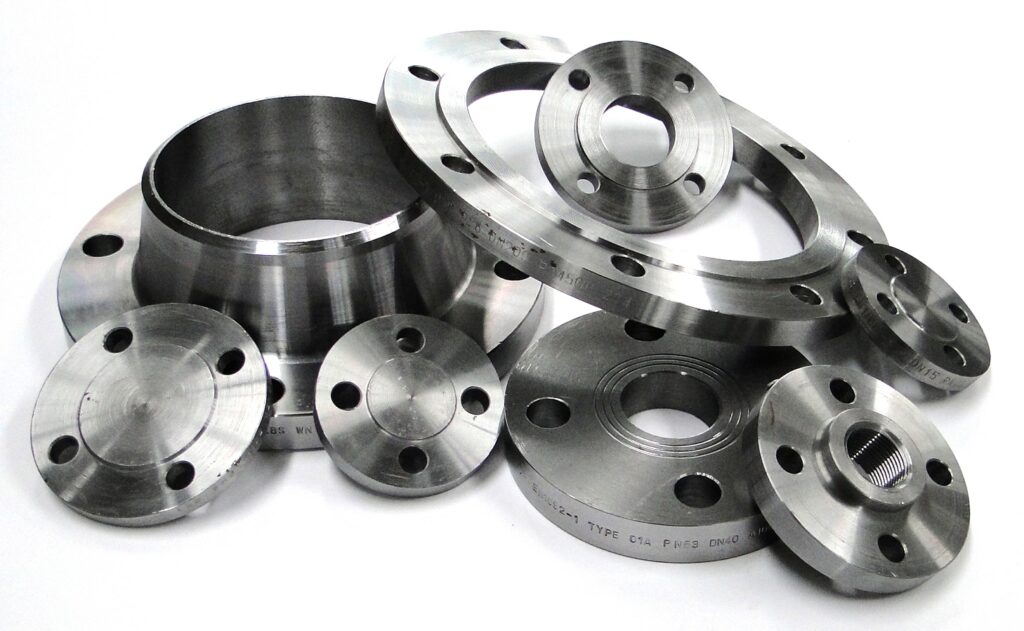
Most common types according to EN 1092‑1:
- Type 01 – Plate flange
- Type 11 – Weld neck flange
- Type 13 – Loose plate flange with welding ring
- Type 21 – Blind flange
When to choose each type?
- Tipo 01 – simple applications, lower pressures
- Type 11 – the safest choice for higher pressures and temperatures
- Type 13 – for stainless‑steel pipes or systems where flexibility is required
- Type 21 – system closure, testing, maintenance
6. Extended pressure ratings covered by Slobrides
Slobrides, in addition to the standard PN10–PN40, also supplies flanges in the following ratings:
PN 2,5
For ventilation, low‑pressure water systems, and applications with minimal loads.
PN 63 / PN 64
For high‑pressure industrial processes, refineries, steam systems, and the chemical industry. Most commonly used in combination with Type 11.
PN 100
For the most demanding applications where extreme pressures and temperatures are present. Often used in combination with RTJ sealing faces.
7. Practical selection examples
Example 1: Hot water 120 °C
- PN16 or PN25
- RF
- Type 11
- Material P245GH
Example 2: Steam 180 °C
- PN25–PN40 or PN63
- Type 11
- Graphite gasket
Example 3: High‑pressure process 250 °C
- PN63 or PN100
- Type 11
- RTJ (if required by the project)
Example 4: Cold water 20 °C
- PN10 or PN16
- Type 01 or Type 11
Conclusion
The correct selection of an EN 1092‑1 flange requires an understanding of three key parameters: pressure, temperature, and medium. Once these factors are defined, it becomes possible to choose the appropriate pressure rating, sealing face, flange type, and material that ensures safe and reliable operation of the piping system.
As a distributor of carbon‑steel flanges and fittings, Slobrides supports engineers and purchasers in technical specification and ensures compliance with European and international standards.